About us · The Octahedron story

Good people deserve a better way to work together.

For decades, we worked with leaders, teams, and organizations trying to answer versions of the same question:

Why do capable people sometimes struggle to do their best work together?

We saw organizations invest heavily in leadership development. We watched talented people step into management. We helped build learning programs used across major companies. And we studied how people learn, adapt, and contribute inside complex organizations.

Again and again, we came back to the same realization:

We spend enormous energy developing individuals. Far less attention is given to developing the team itself.

Octahedron grew from that realization.

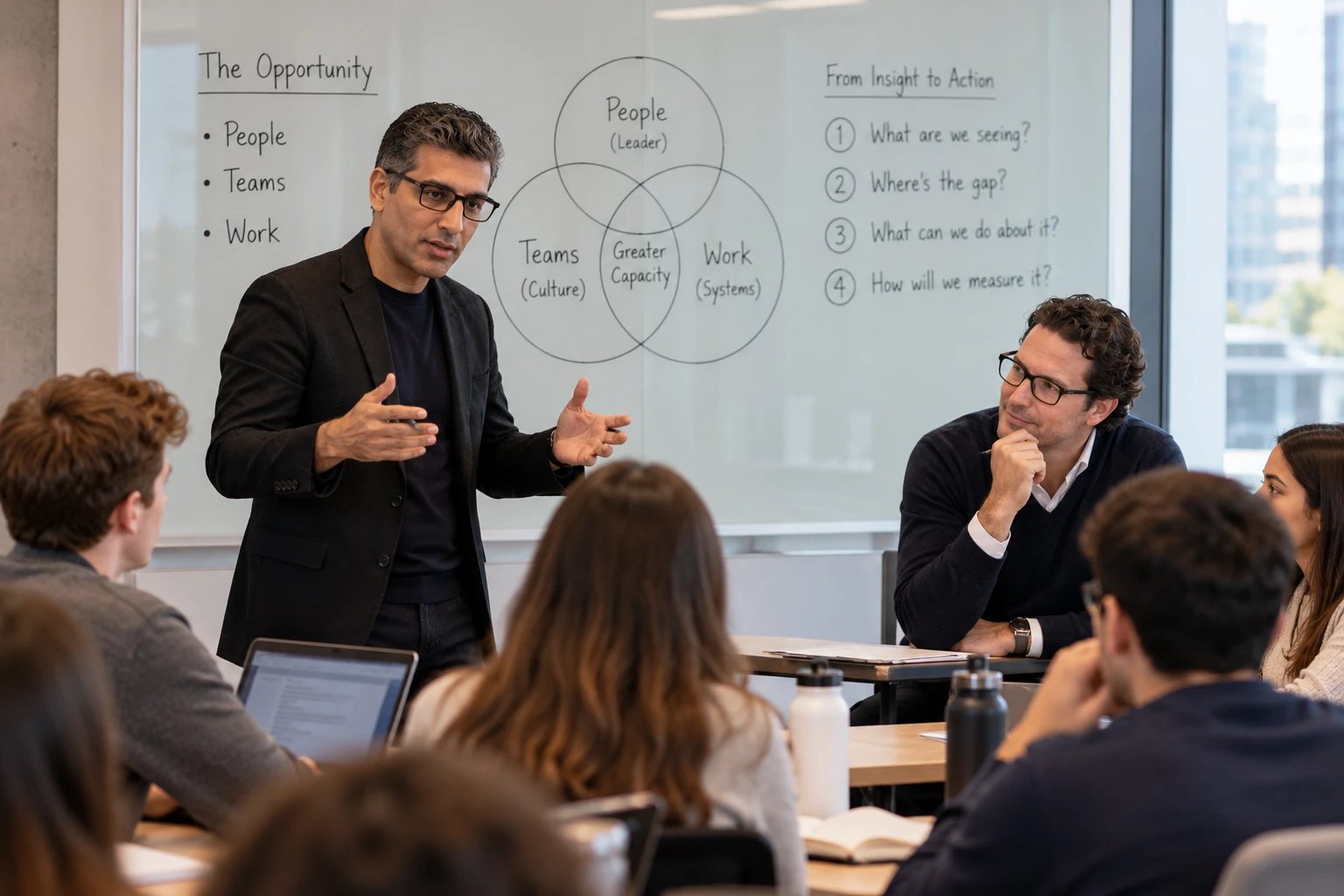
Nabeel and Robert talking through a team’s results at a laptop

A new title doesn’t automatically teach you how to lead.

Robert knows that experience firsthand.

Like many people, he was promoted because he was good at what he did. Then the job changed.

Success was no longer just about his own performance. Suddenly it meant helping other people perform, handling difficult conversations, creating clarity, motivating different personalities, and being responsible for an environment he had never actually been taught how to build.

The title came first.The preparation came later.

The responsibility changed before the support did.

Nabeel encountered the problem from another direction.

Through years spent in learning, talent, technology, and organizational development, he saw managers being asked to create high-performing teams without always being given the structures or tools to understand what was happening inside those teams.

He earned his doctorate at Teachers College, Columbia University, and has taught graduate students there since 2009.

The research studied the individual.The questions were about the team.

Different experiences. Same underlying problem.

We were asking people to lead teams without giving them enough ways to understand the team.

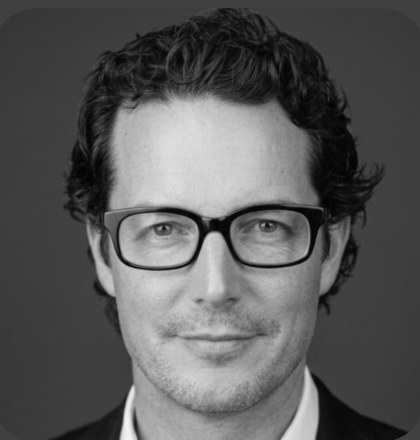
Robert Haddow Beaven

Robert Haddow Beaven

Co-founder & Chief Executive Officer

Robert’s story

Making leadership useful in the real world.

Robert’s work has centered on leadership for more than two decades, but much of what shaped his thinking happened outside traditional leadership programs.

He has worked with hundreds of organizations and leaders, from large global businesses to emerging companies, helping them navigate leadership development, culture, inclusion, growth, and organizational change.

That experience included organizations such as Toyota, Prudential, and other Fortune 100 and Fortune 1,000 companies, where the work often went beyond delivering training. Robert helped translate leadership concepts into applications, learning experiences, tools, and systems that people could actually use inside their organizations.

Those solutions were not Octahedron. But the experience behind them became important to what Octahedron would eventually become.

Taking leadership beyond the classroom.

One chapter proved especially formative.

Robert worked with Jack Welch on expanding Welch’s leadership academy beyond the institute itself, taking the knowledge, principles, and leadership thinking behind the program and turning them into learning solutions that could be delivered across multiple organizations.

The challenge wasn’t simply preserving the content.

It was translating what an experienced leader knew into something other people could understand, apply, and carry into the realities of their own workplace.

That idea would stay with Robert:

Insight only becomes valuable when people can use it.

Years later, that same principle would influence Octahedron. The assessment couldn’t simply produce interesting information about a team. The information had to help people understand what was happening between them.

Robert later served as Chief Operating Officer at a global consulting firm, where his work brought leadership development together with inclusion, belonging, culture, and organizational change.

That experience reinforced another important idea:

Different perspectives don’t become valuable simply because they exist in the same room.

People need an environment where they can actually surface them, hear them, challenge one another, and contribute without having to become more alike.

That thinking is reflected today in one of Octahedron’s foundational ideas: spacious thinking.

View Robert’s professional background
  • Leadership development, culture, inclusion and organizational change with hundreds of organizations
  • Work with Toyota, Prudential and other Fortune 100 and Fortune 1,000 companies
  • Expanded Jack Welch’s leadership academy into learning solutions for multiple organizations
  • Chief Operating Officer at a global consulting firm
  • Robert on LinkedIn ↗
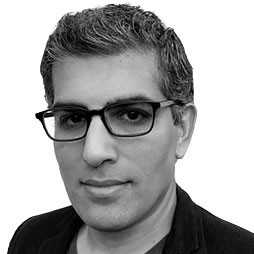
Dr. Nabeel Ahmad

Dr. Nabeel Ahmad

Co-founder & Chief Research Officer

Research→Organizations→Classroom

Nabeel’s story

Understanding how people actually learn.

Nabeel approached many of the same questions from the intersection of learning, technology, research, and organizational strategy.

He earned his doctorate from Teachers College, Columbia University, examining how technology could support learning and development. He would go on to build a career spanning strategic learning, talent, technology, and organizational development in organizations including IBM, JPMorgan Chase, and KPMG.

But the thread running through the work was remarkably consistent:

How do you move from giving people information to actually helping them learn?

Nabeel’s career took that question from corporate environments into the classroom.

He has taught graduate students at Columbia since 2009, including courses examining organizational strategy, learning, HR technology, and the changing workplace.

Teaching created a different laboratory.

Students brought the realities of their organizations into the room. They weren’t discussing organizational change as an abstract concept. They were living it: managing teams, navigating politics, introducing technology, responding to uncertainty, and trying to influence organizations that did not always behave as neatly as the models suggested.

The work reinforced something important:

People don’t learn in isolation from the environment around them.

  • How others respond matters.
  • Whether new ideas can be raised matters.
  • Whether disagreement is possible matters.
  • Whether people feel supported matters.
  • And whether a team can translate all of that into progress matters.

Those questions would eventually find a home inside Octahedron.

View Nabeel’s professional background
  • Doctorate from Teachers College, Columbia University, on how technology can support learning and development
  • Strategic learning, talent, technology and organizational development at IBM, JPMorgan Chase and KPMG
  • Has taught graduate students at Columbia since 2009: organizational strategy, learning, HR technology and the changing workplace
  • Nabeel on LinkedIn ↗

Two careers. One increasingly difficult question.

Robert had spent years trying to make leadership actionable.

Nabeel had spent years studying how learning and organizational behavior actually happen.

Their paths eventually crossed in an environment that made sense for both: a Columbia classroom.

In 2022, Robert joined Nabeel’s Organizational Strategy and Learning students for conversations about leadership, inclusion, psychological safety, learning, and the conditions that allow different perspectives to contribute to an organization.

Nabeel leading a discussion with graduate students at Columbia while Robert listens

But those conversations were part of something larger.

Both had spent years seeing organizations invest in individuals while the dynamics between those individuals often remained much harder to understand.

And an increasingly important question began to emerge:

What if the team (not the individual) became the unit of development?

The decision that became Octahedron

We originally planned to build two assessments.

Planned

One for the individual.

Planned

One for the team.

The individual assessment made sense. It was familiar. Organizations had spent decades helping people understand their personalities, strengths, leadership styles, preferences, and behaviors.

But that was exactly the problem.

The world already had an enormous number of ways to understand the individual.

We kept coming back to what happened between those individuals.

  • Could people raise concerns?
  • Could they challenge the way things had always been done?
  • Did colleagues actively help one another succeed?
  • Could the team turn all of that into meaningful progress?

We made a decision.

Drop the individual assessment. Build for the team.

That decision became the beginning of Octahedron.

We didn’t want to build another way to tell people who they are. We wanted to help teams understand how they work together.

Different companies. Different industries. Familiar patterns.

Between us, our careers have touched hundreds of organizations. Global enterprises. Fortune 100 and Fortune 1,000 companies. Leadership teams. Learning organizations. Growing businesses. Teams operating through enormous amounts of change.

The companies were different.The industries were different.The people were different.

But certain questions kept appearing:

Why do people stop saying what needs to be said?

Why do teams recognize that change is necessary but struggle to adapt?

Why can people genuinely like one another and still fail to support one another when the work gets difficult?

Why can an enormously busy team still struggle to make meaningful progress?

Those experiences did not give us the answer to Octahedron. They gave us better questions.

Experience across our careers includes work in and with organizations such as:

Teams need safety. But safety alone isn’t enough.

Our work kept bringing us back to psychological safety: the ability for people to speak, question, contribute, and take interpersonal risks without expecting punishment or humiliation.

But we became equally interested in what happens after someone feels able to speak.

  • Is their perspective actually considered?
  • Can it challenge the dominant way of thinking?
  • Can multiple perspectives coexist long enough for the team to learn from them?

We use the term spacious thinking for that capacity.

Spacious thinking is not about endless discussion or avoiding decisions.

It is about creating enough room for different ideas, experiences, questions, and interpretations to enter the work before a team closes too quickly around one answer.

Building trust

Helps create the conditions to contribute.

Spacious thinking

Helps the team make something of what is contributed.

Together, they influenced how we began thinking about team behavior.

The result

The result became four interconnected dimensions.

Receptive. Adaptive. Supportive. Productive.

  • Not personality types
  • Not stages a team graduates through
  • Not labels for deciding whether a team is “good” or “bad”

They are four ways of looking at how a team is experiencing its work together.

R

Receptive

How people experience bringing ideas, feedback, questions, and concerns into the team.

A

Adaptive

How the team experiences change, challenge, learning, and the need to work differently.

S

Supportive

How people experience helping, relying on, and contributing to one another’s success.

P

Productive

How effectively the team translates its collective effort into meaningful progress and outcomes.

Facing you: Receptive

No team is one-dimensional.

An octahedron changes depending on where you stand.

Turn it slightly and a different face becomes visible. Change your perspective and the shape hasn’t changed but what you can see has.

Teams are like that.

A leader may experience a team differently than someone new.

A team may appear highly productive while people inside it experience very little receptiveness.

A behavior that works beautifully in one environment may become a liability when circumstances change.

There is rarely one angle from which the whole team can be understood.

That is why we chose the name Octahedron.

The goal isn’t to reduce a team to a number. It is to give people another way to look at what is happening between them.

Each dimension offers a lens, not a label. A direction, not a judgment.

The work we’re proud of isn’t about us.

Clearer, not smaller

We want teams to understand themselves more clearly without reducing people to types, labels, or deficits.

Different, not divided

We believe difference becomes valuable when people have enough safety (and enough space) to let it influence the work.

Development, not diagnosis

We don’t want an assessment to simply tell a team what is wrong.

We want understanding to create a starting point for development.

The team, not the target

An individual result can make someone feel like the problem.

Octahedron was built around the belief that team dynamics belong to the team.

We are still learning too.

Every team brings a different set of people, circumstances, histories, pressures, strengths, and possibilities.

Octahedron is our attempt to give those teams a better way to see what is happening, and a more human place from which to move forward.

Maybe your team isn’t broken.

Maybe there are simply things happening between people that are difficult to see from the inside.

Octahedron was built to make those patterns easier to understand.

Because when a team can see itself more clearly, it has a better chance of deciding what it wants to become.